
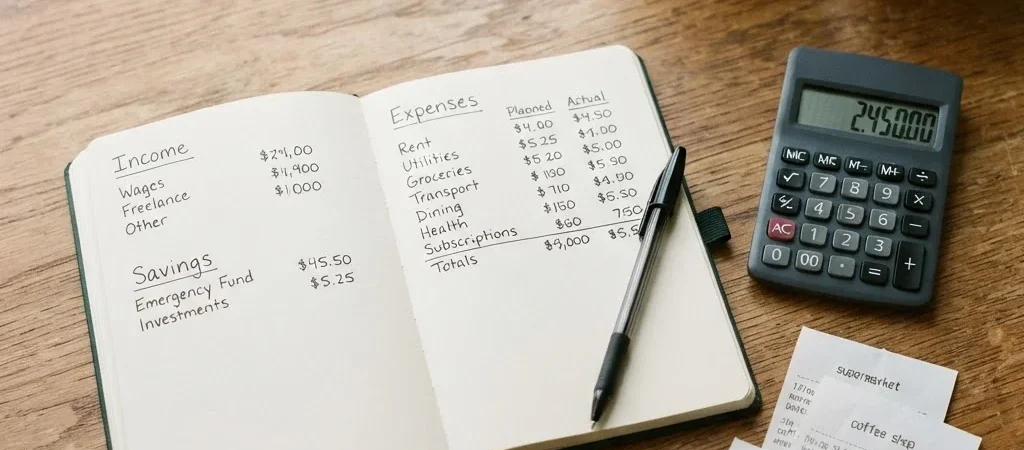
A budget often gets stuck before it starts: the rent is easy to remember, but groceries, transit, and the small charges spread across the month are less clear. Begin with one recent month of real income and expenses. You’re looking for a workable picture, not a perfect one.
Start With Money In
Write down the take-home income you can count on for the month. If your pay varies, use a conservative estimate based on your recent paychecks rather than assuming every month will be a strong one. Keep irregular income separate until it arrives.
Sort What Went Out
Review bank and card transactions, then group them into categories that help you make decisions: housing, groceries, transportation, utilities, subscriptions, and eating out are useful starting points. Keep the labels simple enough that you’ll use them again. If a purchase could fit two categories, choose one consistently.
Separate recurring bills from flexible spending. A monthly phone bill is predictable; groceries may shift week to week. This distinction makes it easier to see which parts of the budget are fixed and where a change might be possible.
Make One Useful Adjustment
Compare total income with total expenses, including any amount you already put toward savings or debt. If expenses are higher, look for a pattern before cutting a category: a few unusually large costs call for a different response than a category that runs over every month. Choose one realistic adjustment and check how it feels after a few weeks.
Your first monthly budget is a draft, not a verdict. Track your progress against it, note what changed, and update the numbers next month. A budget built from your actual habits is more useful than an ideal version you can’t maintain.